The districts
Kyoto's geisha districts
Gion Kōbu, Gion Higashi, Pontochō, Miyagawa-chō and Kamishichiken: Kyoto's five geisha districts, their spring dances and how to see them.
Choose a date for the tea ceremony ↗Quick answer
Kyoto has five active geisha districts, called hanamachi or, locally, kagai: Gion Kōbu, Gion Higashi, Miyagawa-chō, Kamishichiken and Pontochō. Four lie near the Kamo River; Kamishichiken sits apart in the northwest. Each has its own crest, rehearsal hall and annual public dances, mostly in spring, with Gion Higashi's in autumn.
Five flower towns
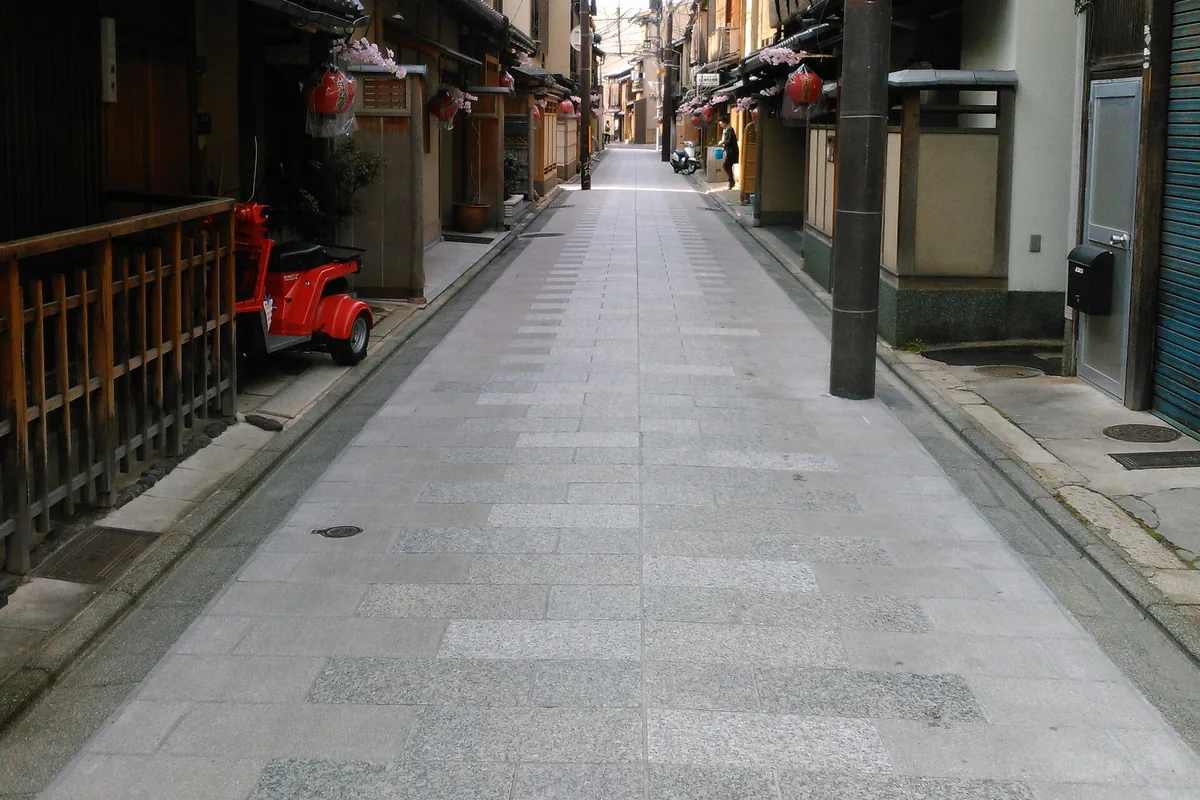
A hanamachi, literally a flower town, is a district where geisha live and work. Each has its own name and crest, and geisha do not usually work outside their own district. Kyoto's five are sometimes called the gokagai, the five flower towns. Shimabara once made a sixth, but it ceased to be a geisha district once its last geisha left in the late 20th century.
Gion Kōbu and Gion Higashi
Gion, in Higashiyama ward, started life as an entertainment quarter facing Yasaka Shrine, and today it holds two hanamachi. Gion Kōbu is the larger, covering most of the district including Hanamikoji; Gion Higashi is smaller and sits in the northeast corner. The two were once one district and split in 1881. Gion Kōbu stages the Miyako Odori, the best-known of the city's dances. Its quieter streets include Hanami Lane and the stretch of the Shirakawa lined with traditional establishments facing the water.
Pontochō and Miyagawa-chō
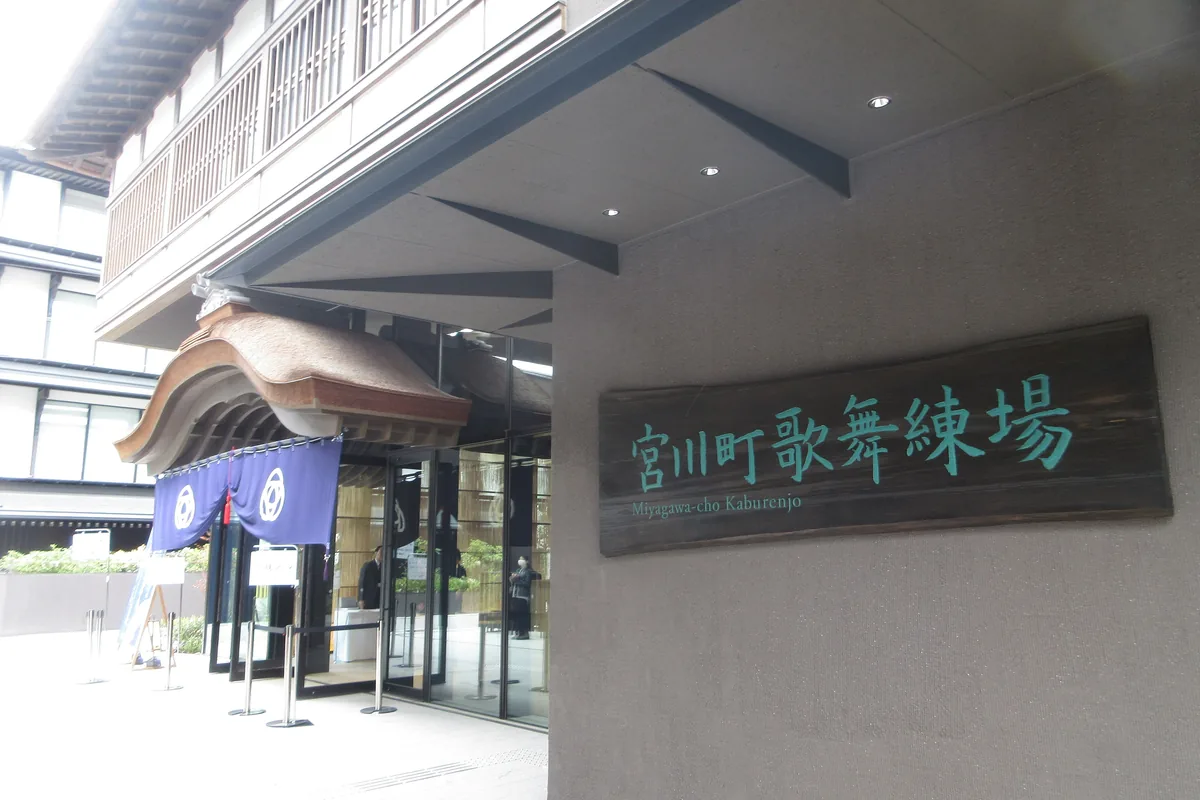
Pontochō is famous, like Gion, for preserving traditional architecture and entertainment; the name is thought to derive from ponte, Portuguese for bridge. Miyagawa-chō grew from an area of the Kamo riverbank where kabuki was played in small theatres. Its crest is three interlocked rings, and it has its own kaburenjō, the theatre where its geisha dance.
Kamishichiken
Kamishichiken, in the northwest just east of Kitano Tenman-gū, is the oldest of the hanamachi and the quietest, drawing fewer tourists than the districts near the river. Its name means seven upper houses, after seven teahouses built from material left over from rebuilding the shrine. Its crest is a ring of skewered dango dumplings. It sits in the Nishijin area, known for hand-woven textiles, and its streets are lined with dark wooden ochaya and okiya.
The public dances
All five districts stage annual public dance seasons with both maiko and geiko. Four hold theirs in spring and one, Gion Higashi, in autumn. The oldest, those of Gion Kōbu and Pontochō, began at the Kyoto exhibition of 1872. Gion Kōbu's season runs through April at its own theatre, and Pontochō's fills most of May. Some tickets add a tea ceremony served by maiko before the show. Kamishichiken's season spans late March and early April, and Miyagawa-chō's the first two weeks of April.
Other ways to see them
Beyond the spring dances, all five districts join in a combined public performance on a weekend in late June, and some geiko and maiko perform dances for visitors at Gion Corner. In Kamishichiken, geiko and maiko serve tea at an open-air tea ceremony at Kitano Tenman-gū during the plum-blossom festival in February. Each of these is tied to a date or a season, which is the main difference from a bookable programme.
Where the tea ceremony fits
The maiko tea ceremony near Gojō sits outside all five districts, in a room near the subway rather than an ochaya. That is its limitation and its convenience: no introduction is needed, and a maiko or geiko hosts every session. If you are in Kyoto in April or May, a district's odori is the other way to see maiko and geiko perform.
Read next: Maiko and geiko: who is who
Sources