The tea
Matcha, sweets and the bowl
Thin tea, the bamboo whisk, dry sweets and how to hold the bowl: a short primer on the Japanese tea ceremony before you whisk your own matcha.
Choose a date for the tea ceremony ↗Quick answer
The Japanese tea ceremony, chanoyu, is the ritual preparation and serving of matcha, powdered green tea. On a hosted programme you make thin tea, usucha, by whipping the powder with hot water using a bamboo whisk until it froths. Dry sweets are traditionally served with thin tea. When you receive a bowl, turn it slightly so you do not drink from the side facing the host.
What chanoyu means
Japanese calls it chanoyu, hot water for tea, and also sadō or chadō, meaning the way of tea. It centres on presenting and serving matcha. Informal gatherings, chakai, offer confections and thin tea; formal ones, chaji, can run to a full meal, thick tea and thin tea over as long as four hours. A short hosted session borrows the relaxed end of that range. Zen Buddhism and Shinto both shaped tea culture, from purifying the hands and mouth before tea to the design of the tea house and its garden gate.
Thin tea and thick tea
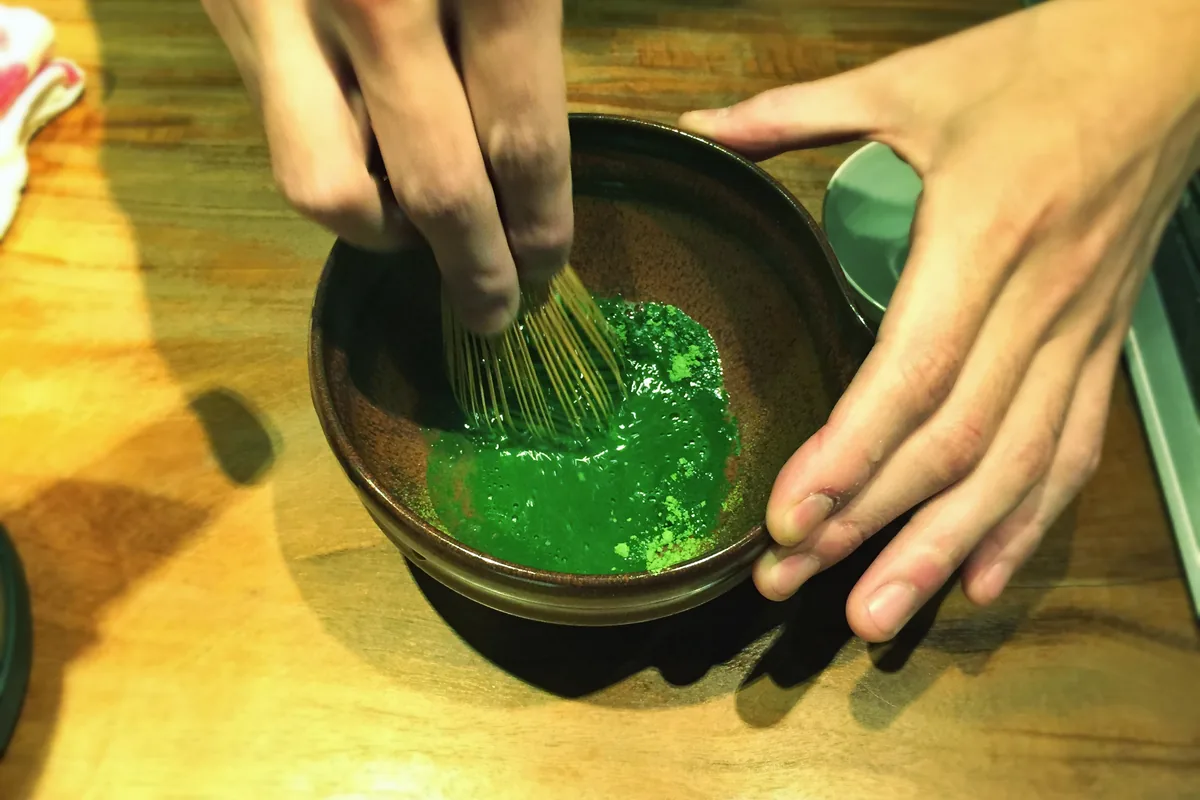
There are two main ways to prepare matcha. Thick tea, koicha, takes roughly three times the powder for its water, and the whisk works it into a smooth, almost paste-like drink. Thin tea, usucha, is whipped with the whisk and foamed to soften its astringency. With thin tea every guest gets a bowl of their own, and it is the kind you are likely to make.
The whisk and the bowl
The chasen, the tea whisk, is cut from one length of bamboo and soon wears out. Tea bowls, chawan, come in many shapes; shallow ones let the tea cool faster. You hold the bowl steady with one hand and whisk briskly with the other until a fine froth covers the surface. Nobody expects a beginner's foam to be perfect.
The sweets
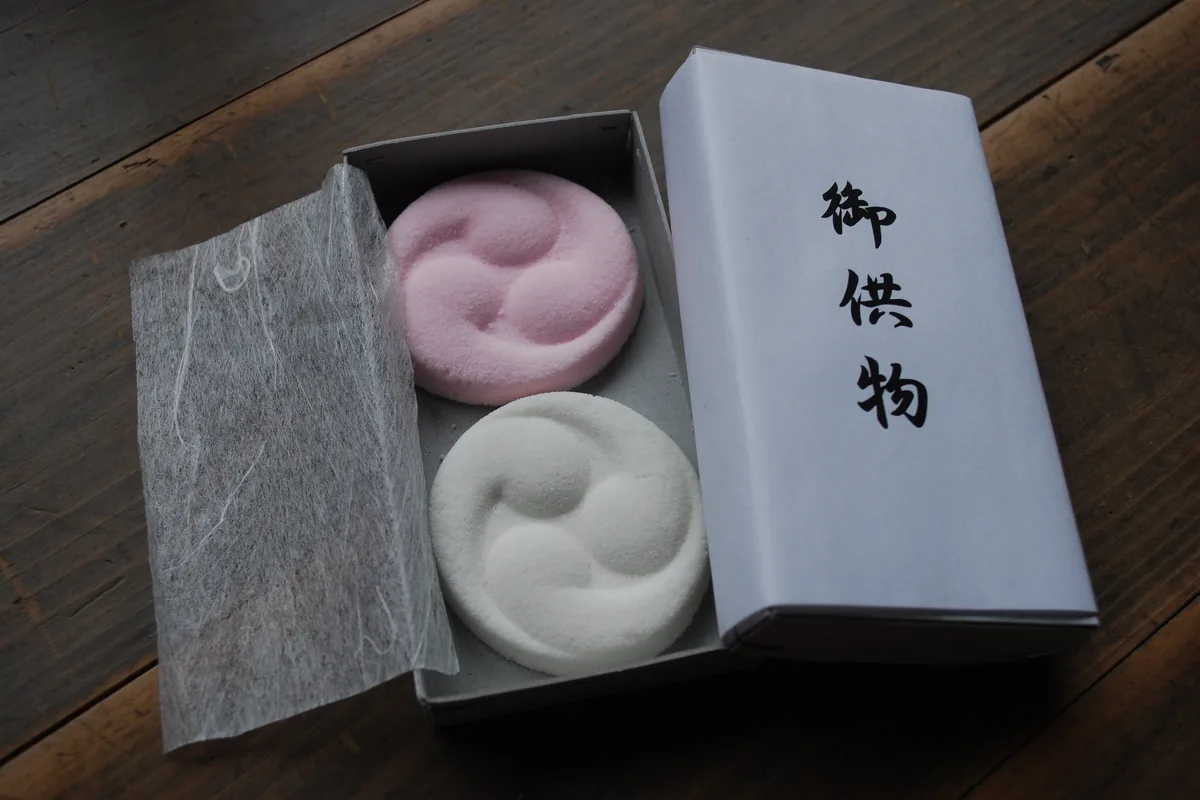
Wagashi, Japanese confections, developed alongside the tea ceremony. They are often classed by moisture: namagashi are wet, han namagashi half-wet, and higashi dry, with less than ten per cent moisture. In a full ceremony the host brings out more confections, usually higashi, to accompany the thin tea, which is why dry sweets suit this kind of session. In a full gathering the sweet is eaten before the tea is served.
How to drink
In a formal gathering, host and guest exchange bows before the tea is drunk. The guest raises the bowl in a gesture of respect, gives it a small turn before sipping, so the side the host presented is not the side drunk from, then praises the tea. In the thin-tea part of a gathering, conversation becomes more relaxed. On a hosted programme the host will show you what she expects, so follow her lead.
Tables, not tatami
Many people picture tea kneeling on tatami. The ryūrei style puts host and guests on chairs at tables instead; the Urasenke school devised it for foreign visitors, who were thought to find chairs easier. The tradition itself owes much to Sen no Rikyū, who in the 1500s reshaped the tea house, utensils and procedures around the aesthetic of wabi.
Read next: Tea with a maiko: worth it?
What a hosted session keeps simple
A full tea gathering involves purifying hands and mouth at a stone basin, examining utensils and scrolls, and a long sequence of set movements by the host. A ninety-minute programme with a maiko or geiko keeps only the core: she demonstrates, you whisk, you drink and you eat the sweets. That is enough to feel how the bowl, the whisk and the foam behave in your own hands, and to recognise what you are watching if you later see a full ceremony.
Sources